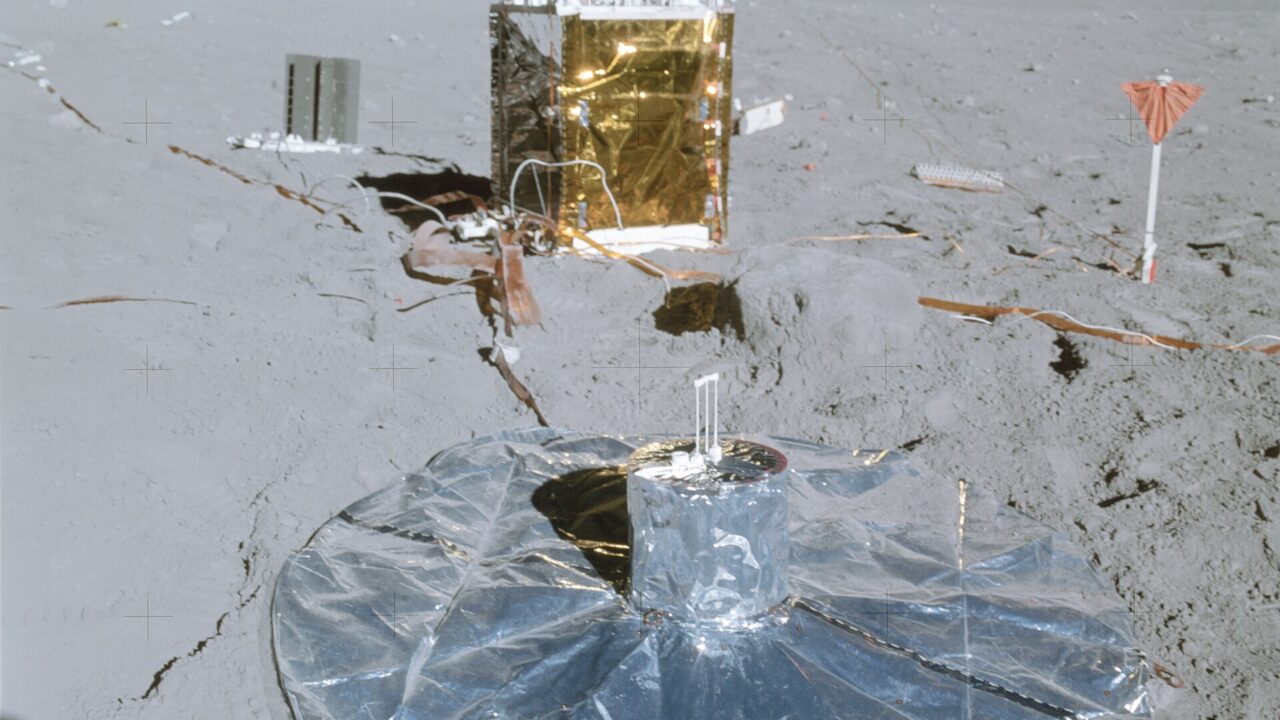
NASA has released the Artemis II archive to the public: more than 800 gigabytes of material from the crewed lunar flyby, including over 11,000 full-resolution images and videos, roughly 8.5 hours of crew audio and the astronauts’ own annotated observations. It is the largest collection of human-gathered lunar observations since Apollo, published through the Planetary Data System where any researcher on earth can download it.
Why does an archive matter more than a press conference? Because Apollo’s scientific yield is still compounding fifty years on, and it compounds because the samples and records were kept. Artemis II’s crew (NASA’s Reid Wiseman and Victor Glover, and Canadian Jeremy Hansen among the four who flew the April 6, 2026 lunar flyby) observed the Moon as geologists who happened to be travelling at orbital speed: photographing impact flashes on the darkened Moon during a solar eclipse geometry no robotic camera had been tasked to catch, annotating surface features on tablets in their own handwriting, narrating what the eye, still the best wide-dynamic-range instrument flown, could see that sensors saturate on.
Human observation is the archive’s differentiator. Robotic orbiters map the Moon superbly and inhumanly; they do not notice. A trained crew member watching a limb at grazing light sees texture, colour variation and shadowing relationships that suggest where a lander should go and what a sample there would mean, and says so, on tape, in context. That narration layer, 8.5 hours of it, turns photographs into field notes, and field notes are the unit in which exploration science is actually written.
The release also sets the Artemis programme’s data politics. Publication through the PDS, in full resolution, without an embargo class for insiders, means the mission’s second crew is the world’s planetary-science community, working free. Discoveries in such archives arrive slowly and then permanently: a crater-counting study here, a regolith insight there, each citing data any sceptic can re-download. In an era of proprietary spaceflight, the public archive is NASA’s argument that exploration is a commons.
Somewhere tonight a graduate student is opening folder one of eleven thousand images. Apollo’s archive took decades to yield parts of its harvest and is still yielding. Artemis II has just planted the same crop, in higher resolution, with the farmers’ voices included. The Moon has not changed. Our ability to remember it, in public, just improved by 800 gigabytes.