Some omicron variants are evolving away from the airway and toward the gut, new research from the University of Hong Kong suggests. In controlled laboratory experiments published in Nature Communications, HKUMed researchers found that the BA.2.86 and JN.1 sublineages replicate more efficiently in human intestinal tissue models, while XBB.1.5 and EG.5.1 remain better adapted for respiratory spread. The shift could open alternative transmission routes — and help explain why JN.1 became one of the world’s dominant variants.
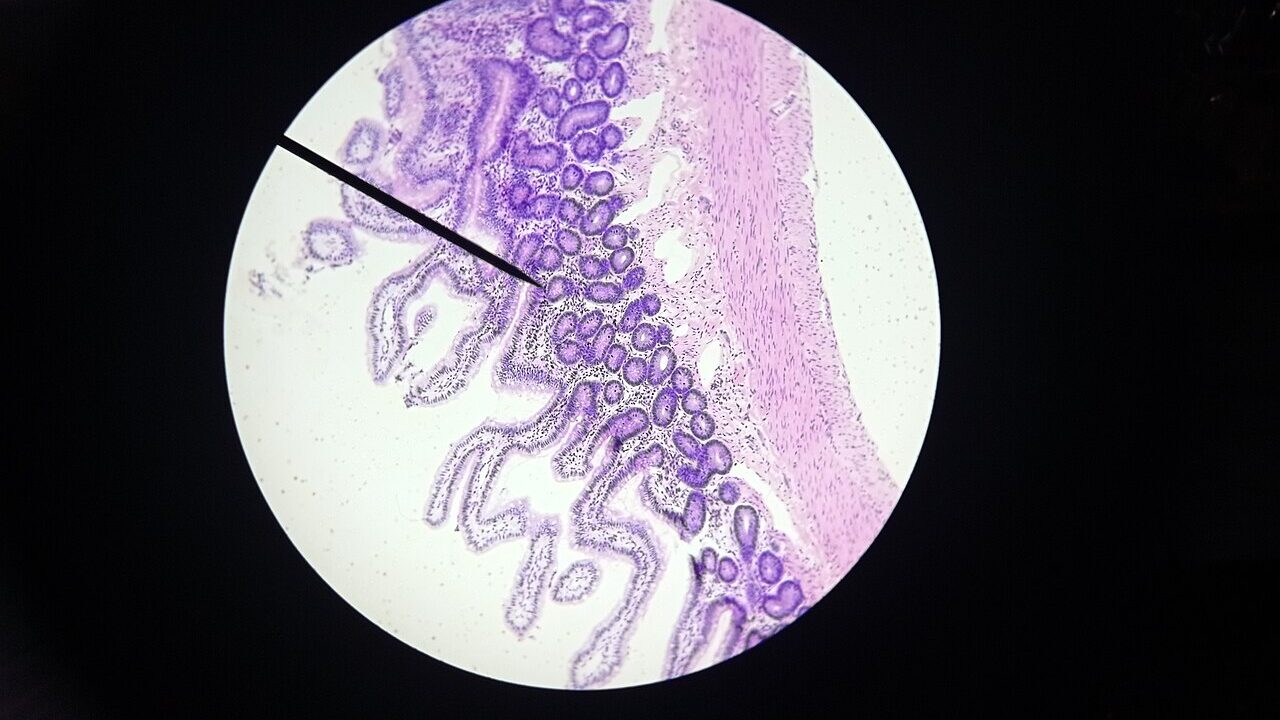
The team, led by professors Michael Chan Chi-wai and Kenrie Hui Pui-yan, tested the variants in models that closely mimic human tissues: bronchial and lung tissues, airway organoids, and intestinal enteroids (miniature lab-grown models of the small intestine) plus colon cells. BA.2.86 and JN.1 reached higher titres in intestinal enteroids than EG.5.1, with a higher ACE2 binding affinity that may contribute to small-intestine tropism. JN.1’s replication was more dependent on ACE2 and TMPRSS2, a finding that could inform treatment strategies.
Silent spread
Perhaps most striking: despite replicating efficiently in intestinal tissues, JN.1 triggered relatively low levels of inflammatory cytokines. Infected individuals may experience few or no digestive symptoms even while the virus actively replicates in their intestines — allowing silent infections to contribute unknowingly to viral spread. The researchers believe this combination of strong intestinal replication and limited inflammation helped JN.1 outcompete other variants globally.
What it means for surveillance
The findings underscore that SARS-CoV-2 is not static but a shape-shifter expanding its reach in the human body. The authors say the work highlights the importance of monitoring gastrointestinal infection patterns alongside respiratory characteristics when evaluating future variants — and of paying greater attention to fecal-oral transmission pathways, particularly where sanitation is poor. As immunity from vaccinations and prior infections declines over time, understanding how the virus evolves will inform public health planning for future outbreaks.