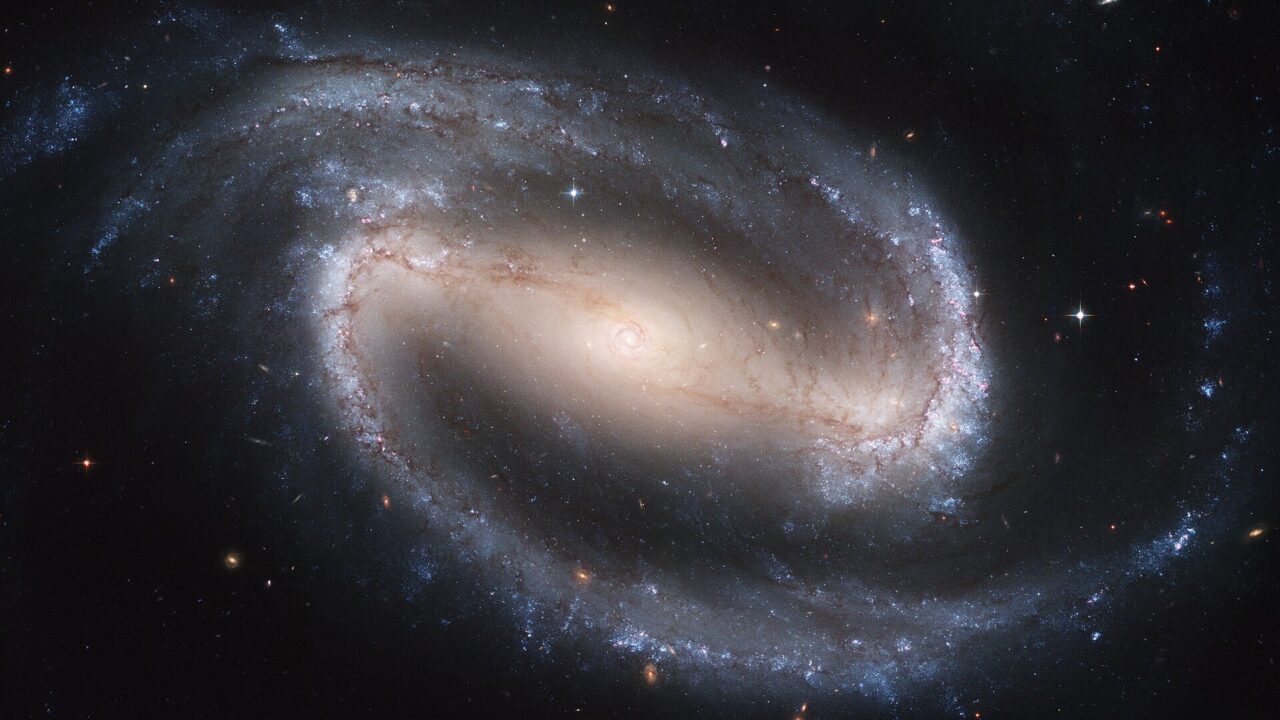
A new study of 136 nearby galaxies has found less dark matter at their centres than the leading computer models predict, a result that tests the standard picture of how galaxies form. The work, published in the journal Nature Astronomy on November 27, weighs the stars and gas in galaxies ranging from about one billion to 300 billion times the mass of the Sun, and finds the shortfall grows with galaxy size.
A gap that grows with size
The team, led by Yu Lei of the Shanghai Astronomical Observatory, combined star movements measured by the MaNGA and CALIFA surveys with radio observations of hydrogen gas from the Five-hundred-meter Aperture Spherical radio Telescope, known as FAST. By tracing how fast stars and gas move at different distances from each galactic centre, the researchers worked out how much unseen mass must be present. In the most massive galaxies, the region where dark matter falls short of the models extends up to 50 kiloparsecs from the centre, a distance of about 160,000 light years.
The mismatch matters because dark matter is thought to provide the gravitational scaffolding that lets galaxies form and keeps their stars from flying apart. Standard simulations generally place a dense concentration of dark matter at the heart of every large galaxy. The new measurements suggest that picture is incomplete, at least for the biggest systems, and that something is either pushing dark matter outward or stopping it from piling up in the first place.
What could explain the shortfall
One candidate is feedback, the name astronomers give to the energy released by exploding stars and by supermassive black holes at galactic centres. Such outbursts can stir the gas in a galaxy and may also loosen the dark matter around it. Another possibility is that dark matter itself behaves differently from the simple cold, slow moving particles assumed in most simulations. The study does not settle between those ideas, but the result gives theorists a precise target to aim at. Co-author Jesus Falcon-Barroso, of the Instituto de Astrofisica de Canarias, said the finding poses a demanding test for current models.
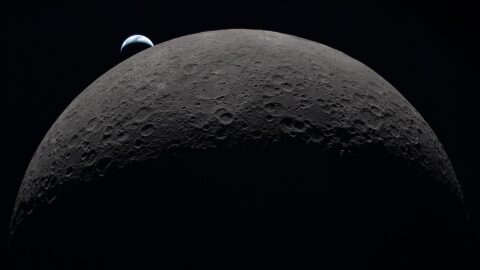
The result also shows how far galaxy surveys have come, and crewed spaceflight is back in the spotlight, with Artemis II flying around the Moon in NASA’s official broadcast and with NASA opening bids for a first nuclear reactor on the Moon. The combination of large sky surveys and the giant FAST dish has made it possible to compare real galaxies with simulations galaxy by galaxy. If the shortfall holds up in larger samples, textbooks on galaxy formation will need a rewrite, and the invisible scaffolding of the universe may turn out to be lighter at the centre than anyone expected.