Kenya’s Ebola response faced its first stress test this week in Wajir County, where a second suspected case was reported at Habaswein as the United Kingdom updated its travel advice for Kenya following the confirmed imported case in Nairobi. The Wajir report is a suspicion, not a confirmation, and the distinction is the whole discipline of outbreak management.
Suspected cases are the noise every surveillance system must generate to be trusted. A system that only reports certainties will miss the one certainty that matters; a system that reports suspicions must then clear them quickly, in public, before the suspicion itself becomes the outbreak’s second casualty: trust. In Wajir, health authorities moved to isolate the patient and open investigations, the correct unglamorous sequence, while the ministry’s national tally stood at 57 contacts traced from the confirmed Nairobi case, ten in quarantine.
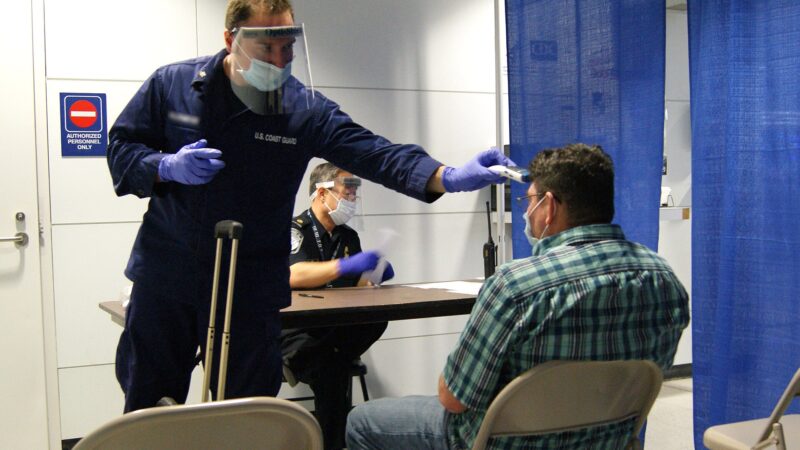
The UK Foreign Office advisory, issued October 7, urged travellers to follow Kenyan health authorities’ guidance and warned of enhanced screening, particularly for arrivals from Uganda, Ethiopia and the DRC. Travel advice is a lagging, conservative instrument; its significance is less the warning than the signal to airlines, insurers and tour operators, whose decisions can cost an economy more than the virus. Kenya has so far held the WHO line (no travel or trade restrictions) while regional neighbours vary: Rwanda has barred recent visitors from the DRC. Two theories of border safety are now running in parallel in East Africa, and both cannot be right in their risk arithmetic.
Amnesty International Kenya added the civil-liberties dimension this week, welcoming the tracing while warning that emergency powers must stay lawful, proportionate and time-bound, with contact data collected minimally and transparently (see our coverage). Between the virus, the market and the constitution, the response has at least three judges, and passing one exam while failing another still fails.
The next update from Wajir, cleared or confirmed, matters less for its result than its speed. Outbreaks are survived in the interval between suspicion and certainty, and that interval is a choice made by laboratories, motorbike couriers and ministry spokespeople. Kenya’s first week has been fast and public. Week two is where fast and public usually get expensive, and where this response will actually be graded.